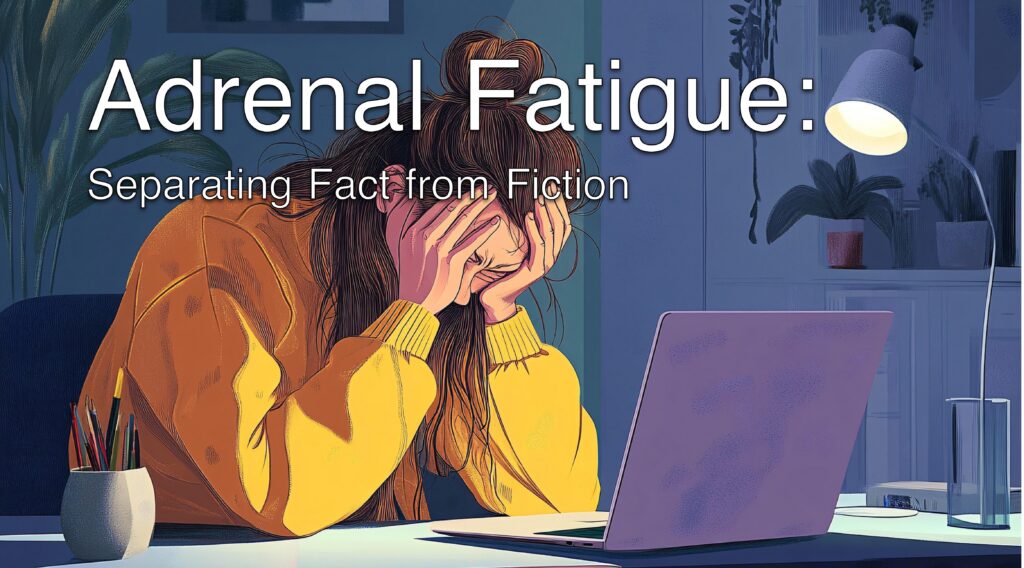
From the desk of Lewis Blevins, MD – There is no such thing as adrenal fatigue. Period.
I’ve seen plenty of patients over my career who have been referred for this “condition.” It’s not a thing. Never has been. And never will be.
The hypothesis for this nonexistent entity holds that stress causes adrenal exhaustion and dysfunction, leading to symptoms of adrenal insufficiency, the adrenals said to fail under the burden of chronic stress.
Adrenal function is always normal in these patients. That is, before those who’ve been told they have this condition start taking steroids. Once they do, pituitary-adrenal function becomes suppressed. Invariably, people don’t feel better, so they increase their steroids to four or five times the daily replacement dose and begin suffering the side effects of steroid therapy. Harm has been done by taking medications for a presumed condition that doesn’t even exist.
Similar claims have been made across nearly every endocrine system. Here are two of the more common scenarios:
Hypothyroidism symptoms despite entirely normal thyroid hormones and no evidence of pituitary or thyroid disease. Some people demand thyroid hormone to push their levels to the upper limit of normal, in spite of no evidence of disease and the potential long-term side effects of thyroid hormone therapy.
Symptoms of testosterone deficiency despite normal testosterone levels and no pituitary or testicular abnormalities. Some men believe that achieving high testosterone will correct what ails them. Many are what one of my colleagues used to call “gym rats” fit, bodybuilder types.
Most people presenting with one of these three scenarios share a few things in common. They don’t feel well. They are seeking answers. They have been persuaded to accept explanations not grounded in normal physiology. They refute experts in the field. They don’t consider lifestyle or chronic stress as potential causes. And some have depression that must be treated.
My advice: if you’ve seen three or more highly educated endocrinologists and have been told you are normal — and that these diagnoses, and more, have been excluded — then believe the experts. And the data. Dismiss the pseudoscience you’ve read online. Work with your doctor to determine whether some underlying disorder explains what you’re experiencing.
This is an AI generted image by Tyli Jura from Pixabay
© 2026, AWN. All rights reserved.