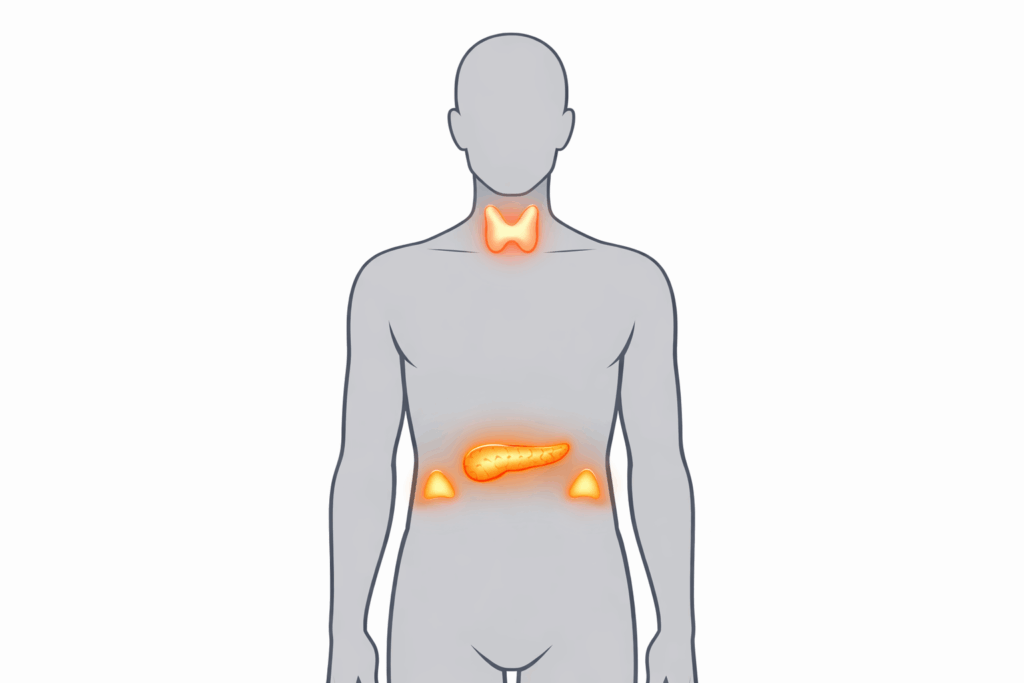
From the desk of Lewis S. Blevins Jr. MD – Medical Director of the California Center for Pituitary Disorders at UCSF and AWN cofounder – Schmidt’s syndrome is a condition described by the association of primary adrenal insufficiency, often referred to as Addisons disease, with autoimmune thyroid disease in the form of Hashimoto’s thyroiditis, with or without hypothyroidism, or Graves’ disease, with or without hyperthyroidism.
This condition is often referred to as PGAS type 2. PGAS stands for polyglandular autoimmune syndrome.
About 25 to 40% of patients with Schmidt’s syndrome develop autoimmune or type 1 diabetes mellitus. The term Carpenter’s syndrome has been used to describe these patients.
Patients with these conditions are also at risk to develop other autoimmune conditions. Many have relatives who have one or more autoimmune conditions. Common abnormalities include pernicious anemia, vitiligo, lupus, rheumatoid arthritis, celiac disease, myasthenia gravis, idiopathic thrombocytopenic purpura, and alopecia.
These disorders are polygenic meaning several genes are probably involved. Several HLA types, including HLA DR3 and DR4, and other leucocyte genes are involved. This condition is autosomal dominant but not everyone with the genetics develops the syndrome.
Diagnosis requires a recognition of the potential associations of these conditions. For example, adrenal insufficiency should be suspected in a patient with lassitude, weight loss, fatigue, and dehydration with hyponatremia and hyperkalemia.
Successful treatment is accomplished by management of the individual conditions. For those patients diagnosed with both adrenal insufficiency and hypothyroidism at the same time, it is wise to administer steroid replacement for a day or two prior to starting thyroid hormone replacement. Patient education regarding alterations in steroid doses for varying levels of physical stress, such as illness or injury or for medical procedures, is essential.
All patients with these conditions should wear or carry medical alert identification to inform health care providers of their conditions in the event that they are unable to communicate with providers.
Read about a case of Schmidt’s syndrome here .
Click here for more content on adrenal Insufficiency.
The image was generated with artificial intelligence.
© 2026, AWN. All rights reserved.